The Art (and Heart) of Strategic Planning

Tania Willis • April 6, 2026

Recently, I’ve been reflecting on what it really means to plan strategically - not as a process, but as a practice of connection, curiosity, and courage.

Over the past week, I’ve found myself deep in thought about strategic planning - not just what it is, but how it feels when we do it well.


This weekend, I’ll have the privilege of gathering with our The Australasia Charter Chapter of the ICF Board, Branch Leaders and support team for our annual Strategy Weekend. This will be my third and it’s one of my favourite times of the year - a moment when passionate volunteers come together to reflect, recalibrate, and re-imagine how we continue advancing the coaching profession across our region.


In preparation, I’ve been exploring insights from the latest ICF Global Coaching Study, reflecting on our collective strengths, challenges, and opportunities. I’ve been shaping an agenda designed not just for productivity, but for connection - ensuring we leave feeling aligned, energised, and ready for the year ahead.


And through all of this, I’ve been asking myself:


What does it really mean to plan strategically? And why does it matter?


Here’s some of my key reflections:


Strategy is a Conversation, Not a Document

Too often, strategy gets reduced to a plan on a page - something static, measurable, and tidy. But leadership (and life) rarely fits neatly inside tidy boxes.


True strategic planning isn’t about control - it’s about curiosity. It’s the collective act of asking big questions and listening deeply to what emerges.

Questions like:

  • What’s most important right now?
  • What are we learning as we go?
  • What might we need to release to create space for what’s next?


When we approach strategy as a conversation instead of a checklist, we invite adaptability, creativity, and shared ownership. We allow strategy to come alive - a living expression of who we are and what we value.


Thinking Systemically, Acting Deliberately

At its best, strategic planning sits at the intersection of systems and purpose. It’s the balance of zooming out to see the patterns while zooming in to act with intention.


As a coach, I often see leaders wrestling with the tension between vision and execution. Too much focus on the horizon, and the plan can feel abstract. Too much focus on the day-to-day, and we lose sight of why it matters.


Effective strategy bridges that space. It connects the head (clarity, structure, foresight) with the heart (values, culture, meaning). It ensures that every action, however small, aligns with a bigger purpose.


For ICF Australasia, that purpose means:

  • Building a strong, trusted brand that elevates professional coaching.
  • Creating a sustainable and rewarding volunteer experience.
  • Attracting and developing members committed to excellence, ethics, and growth.


Each of these priorities is a deliberate choice - an expression of who we want to be as leaders and as a community.


Strategy as a Practice of Renewal

Strategic planning isn’t a one-off event. It’s a rhythm - a continuous cycle of reflection, learning, and renewal.


Like coaching, it’s not about having all the answers. It’s about creating the conditions for insight to emerge. The best strategies build in moments of pause, reflection, and recalibration. They recognise that change is constant and that effective planning must be dynamic, too.

As we step into our strategy weekend, my focus isn’t on producing the perfect plan. It’s on nurturing the thinking, trust, and collective intention that will carry us forward.


Because when strategy is grounded in values, guided by strengths, and sustained by community - it doesn’t just shape the year ahead.

It shapes who we become.


A Reflection for You

Whether you’re leading a team, a project, or an organisation, take a moment to pause and ask yourself:

Is your strategy a document - or is it a conversation?


The answer might just reshape the way you lead.


Continue the Conversation

I’d love to hear how you approach strategic planning in your own leadership or organisation. What helps you move from “planning” to “strategic thinking”?


Let’s connect and explore this together.


Follow Advantage Point for weekly reflections on leadership, coaching, and the art of growth.

Advantage Point
By Tania Willis April 6, 2026
Let me start with a confession: When I first heard about “leadership coaching,” I pictured someone in an expensive suit telling executives to “think outside the box” while charging consulting fees that could fund a small apartment. The expensive suit part? Sometimes accurate. Everything else? Not even close. Leadership coaching has evolved into one of the most evidence-backed, ROI-positive interventions available to organisations today. And if you’re leading a team, building a company, or trying to figure out why your highly talented staff keeps walking out the door, it’s worth understanding what this actually is and why it matters. What Is Leadership Coaching, Really? At its core, leadership coaching is a structured, confidential partnership between a trained coach and a leader, designed to unlock that leader’s potential, enhance their effectiveness, and ultimately drive better outcomes for their team and organisation. Think of it less like a guru dispensing wisdom from a mountaintop, and more like having a thinking partner who asks the questions you’re not asking yourself. The good stuff happens when a leader realises, mid-sentence: “Wait… am I actually the bottleneck here?” Unlike training (where someone teaches you skills) or mentoring (where someone more experienced guides you based on their own path), coaching is: Personalised to your specific context and challenges Action-oriented with genuine accountability Future-focused rather than dwelling on past mistakes Question-driven rather than advice-giving The Evidence: When the Researchers Started Paying Attention Here’s where it gets interesting. Leadership coaching isn’t just feel-good corporate theatre. The research is increasingly compelling: The Manchester Review Study (2001), conducted with 100 executives, found that coaching generated an average ROI of nearly 600%. When the broader benefits to the organisation were considered, that figure jumped to over 700%. Not too shabby for “soft skills.” Harvard Business Review research has consistently shown that leaders who receive coaching demonstrate significant improvements in: Goal attainment (70-80% improvement) Relationship quality with direct reports Organisational commitment Work-life balance (yes, really) A Metropolitan State University study, published in 2009, found that while training alone improved productivity by 22%, training combined with coaching increased productivity by 88%. That’s not a typo. The difference between giving someone tools and helping them actually use those tools effectively is profound. Stanford’s Executive Coaching Project revealed that nearly 100% of coached leaders and their stakeholders reported being satisfied with the coaching experience, with measurable improvements in business management, teamwork, and relationships with direct reports. More recently, the International Coaching Federation’s Global Consumer Study found that 80% of people who receive coaching report increased self-confidence, and over 70% benefit from improved work performance, relationships, and communication skills. How Leadership Coaching Actually Helps For Individual Leaders This year, I worked with a brilliant senior executive in the Australian Public Service - let’s call her Kate - who was drowning. Fifteen-hour days, endless emails and Teams messages, a team that couldn’t seem to make decisions without her. She’d been promoted based on technical excellence but hadn't learned to lead at scale. Through coaching, Kate discovered she was unconsciously creating dependency. Every time someone came to her with a problem, she’d solve it (because she could do it faster). Her team learned not to think independently. Within three months of shifting her approach - asking more questions, delegating with genuine authority, creating space for others to fail and learn - her reactive workload dropped by roughly 30%, and her team’s throughput increased. Leadership coaching helps individuals: Gain self-awareness about blind spots and impact on others Navigate transitions (new role, new industry, scaling up) Develop emotional intelligence and interpersonal effectiveness Build strategic thinking capabilities Manage stress and prevent burnout through better systems and boundaries For Teams When a leader changes, the ripple effects are immediate. Kate's team didn’t just become more autonomous; they became more engaged. Retention improved. Innovation picked up because people felt safe to experiment. The research from Google’s Project Aristotle (their massive study on team effectiveness) found that psychological safety is the number 1 factor in team performance. Coaching helps leaders create that environment. Teams benefit from leadership coaching through: Improved communication patterns and reduced misunderstandings Higher trust levels when leaders model vulnerability and growth Better conflict resolution as leaders learn to facilitate rather than avoid Increased accountability through clearer expectations and follow-through Enhanced collaboration when leaders understand team dynamics For Organisations Here’s the business case that gets CFOs interested: A study in The International Journal of Evidence Based Coaching and Mentoring (2012) found that executive coaching resulted in: 48% improvement in management skills 53% increase in productivity 39% improvement in customer satisfaction 43% increase in employee satisfaction Pricewaterhouse Coopers conducted a survey revealing that the median ROI for companies investing in coaching was seven times the initial investment. For every dollar spent, seven dollars came back in the form of increased productivity, better leadership, improved retention, and other benefits. Organisations see returns through: Reduced turnover among high-potential talent (replacing a senior leader can cost 2-3x their annual salary) Faster onboarding of new leaders into complex roles Culture change that actually sticks because it’s modelled from the top Succession planning that develops internal talent rather than constantly buying it Better decision-making as leaders learn to think more systemically The Real-World Messy Middle Not every coaching engagement ends with a promotion and a TED Talk. Sometimes coaching reveals that someone is genuinely in the wrong role. I once coached a leader who realised through our work that they’d been chasing a version of success their parents wanted, not the one they wanted. They left leadership entirely, started a small business, and last I heard, they’re thriving. That’s still a win. Better that realisation happens through structured reflection than five years and a stress-induced health crisis later. Other times, the challenge is organisational. No amount of coaching will fix a leader who’s set up to fail by impossible demands, toxic cultures, or contradictory expectations. Good coaching sometimes means helping someone see that clearly and make informed choices. What Leadership Coaching Isn’t Let me be clear about what you’re NOT getting: Therapy (we’re not unpacking your childhood, though self-awareness is part of the work) Consulting (a coach won’t do your strategic planning for you) Magic (real change requires real work and real time) One-size-fits-all (cookie-cutter approaches miss the point entirely) The Bottom Line Leadership is learned, not born. And like any complex skill, having someone help you see your own patterns, challenge your assumptions, and experiment with new approaches dramatically accelerates growth. The research is clear: leadership coaching delivers measurable returns. The ROI data is compelling. But beyond the numbers, there’s something deeper. Leaders who are coached become better at developing others, creating a multiplier effect that compounds over time. In a world where the half-life of skills is shrinking and the pace of change is accelerating, the ability to learn and adapt isn’t a nice-to-have. It’s the competitive advantage. So whether you’re a CEO wondering why your leadership team isn’t clicking, a mid-level manager feeling stuck, or an HR professional building development programs, leadership coaching deserves a serious look. Not because it’s trendy, but because it works. And if nothing else, imagine having someone whose job is to help you think more clearly about the problems that keep you up at night. In my experience, that alone is worth the investment. What has been your experience with leadership coaching - as a coach, coachee, or observer? I’d love to hear your stories. Interested in hiring a coach to support your leadership challenges in 2026? 📩 Email: tania@advantagecoaching.com.au or schedule a clarity call.
By Tania Willis April 6, 2026
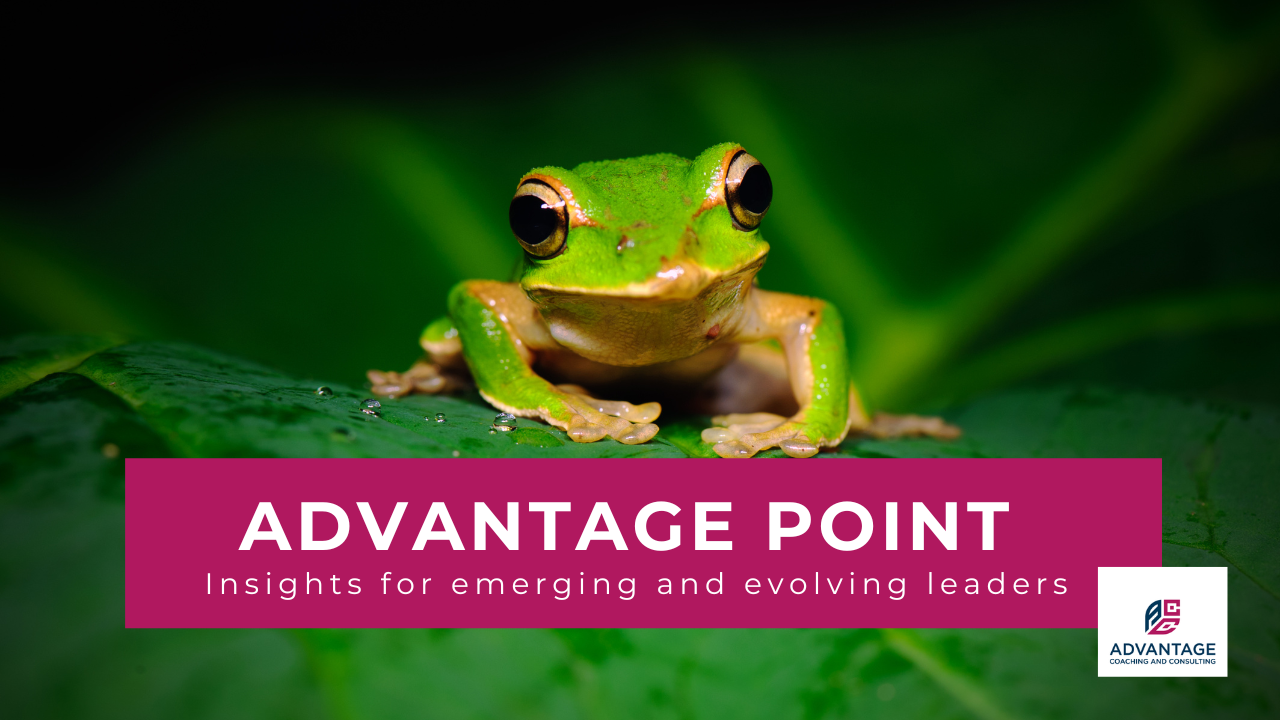
Lately, I’ve been deep-diving into research on burnout and neuroscience, and, like any good coach-slash-human, it made me think about my own experience with it over the years. Burnout is sneaky. It doesn’t arrive with a dramatic meltdown. It tiptoes in with a spreadsheet and a smile. And yes… the frog-in-boiling-water story comes to mind. 🐸 Poor frog. You've heard the story. A frog in boiling water jumps out immediately, but a frog in water that slowly heats up will stay until it's too late. It's become the go-to metaphor for burnout; we don't notice the temperature rising until we're completely cooked. Here's the thing: it's not true. Actual frogs? They jump out. Every single time. Scientists have known this since the 1800s, but we keep telling the story because it feels true. And that's precisely the problem with burnout among leaders and executives. We are often worse at self-preservation than an amphibian with a brain the size of a grain of rice. Why We're Less Smart Than Frogs Unlike our fictional boiled frog, we have something working against us: a prefrontal cortex that's excellent at rationalisation. "It's just a busy season." "Everyone's counting on me." "I'll rest after this project." You know what I’m talking about, right? Yesterday, in the incredible Brain Friendly Leadership Certification that I'm currently working towards, the stats on workplace burnout were sobering. A recent Boston Consulting Group study across eight countries found that 48% of workers are currently experiencing burnout. In contrast, a global McKinsey study indicates that, on average, 1 in 4 employees report symptoms of burnout." Here in Australia and New Zealand, the water's hot. Gallup's 2023 State of the Australian and New Zealand Workplace report found that five out of 10 Australians are experiencing "a lot of stress" at work, while research from the Wellbeing Lab shows that almost two thirds of Australian workers (63.6%) are feeling burned out, with nearly nine in 10 saying they've been feeling that way for an extended period. And here's the kicker: leaders are reporting significantly higher levels of stress than their people. We're not just staying in hot water - we're turning up the heat ourselves and calling it leadership. The neuroscience here is fascinating. When we're chronically stressed, our amygdala (the brain's alarm system) goes into overdrive while our prefrontal cortex (responsible for decision-making and self-awareness) gets quieter. It's like having a smoke detector blaring while someone turns down your ability to hear it. We literally lose our capacity to recognise we're burning out while we're burning out . The Early Warning Signs (That We Ignore) Dr. Christina Maslach's research on burnout identifies three core dimensions: exhaustion, cynicism, and reduced professional efficacy. But these don't show up overnight. They creep in: You're answering emails at 11 PM and telling yourself it's "just catching up" Your default response to new ideas has become "yeah…but that won't work" before you've really listened You're busy all day but can't quite remember what you accomplished You snap at people you actually like Sunday nights fill you with dread The water's warming. Sound familiar? I’ve certainly been there - several times. Neuroscience-Backed Tips for Busy Leaders Micro-recoveries beat macro-vacations: Your brain can't sustain focus for 8-10 hours straight. Research by DeskTime found top performers work in 52-minute bursts followed by 17-minute breaks. Your prefrontal cortex needs these recovery moments to maintain executive function. One client of mine sets a timer and takes a 10-minute walk every 90 minutes. He says it's the number 1 reason he survived his last product launch with his sanity intact. Sleep is non-negotiable: I know, I know. But here's the neuroscience: during sleep, your brain clears out metabolic waste products, including beta-amyloid (yes, the Alzheimer's protein). Matthew Walker's research at UC Berkeley shows that even one night of poor sleep significantly impairs emotional regulation and decision-making. You're not "powering through" - you're making yourself less effective. The power of "no" (your anterior cingulate cortex will thank you): Every time you say yes to something that doesn't align with your priorities, your brain experiences conflict - literally. Your anterior cingulate cortex has to work overtime managing the dissonance. Practice saying "That's not going to work for my schedule today/this week/this month. Watch how much mental energy you get back. Move your body, change your brain: Exercise increases BDNF (brain-derived neurotrophic factor) - essentially Seasol for your brain. Even a 20-minute walk can reset your stress response system. One executive I work with does walking one-on-ones. She gets movement, her team gets face time, and nobody's staring at another screen. Connect with humans (not just on Slack): Loneliness and isolation activate the same brain regions as physical pain. Meanwhile, genuine social connection triggers oxytocin release, which literally calms your nervous system. Have one real conversation per day - not about work, just about life. It matters more than you think. The Question You're Probably Not Asking Here's what I ask my coaching clients when they're running on fumes: "If you wouldn't treat your best performer the way you're treating yourself, why is it okay to treat yourself that way?" Usually, there's a long pause. The truth is, we've confused self-sacrifice with leadership. We've mistaken exhaustion for dedication. We've told ourselves that rest is something we'll do later, after we've earned it. But the frog - the real one, not the metaphorical one - knows something we've forgotten: when the water gets too hot, you jump. Not because you've finished everything on your to-do list. Not because you've proven your worth. Not because someone gave you permission. You jump because you're smart enough to know that staying is not actually an option. So, What Now? Here’s one question to reflect on: What's one sign that your water temperature has been rising that you've been ignoring? Sit with the question. The answer might surprise you. And if you need permission to jump out of the hot water? Consider this your permission slip. The frog would approve. What's one small change you could make this week to turn down the temperature? Need more strategies to address your leadership challenges? send me a DM, 📩 Email: tania@advantagecoaching.com.au or schedule a clarity call.
By Tania Willis April 6, 2026
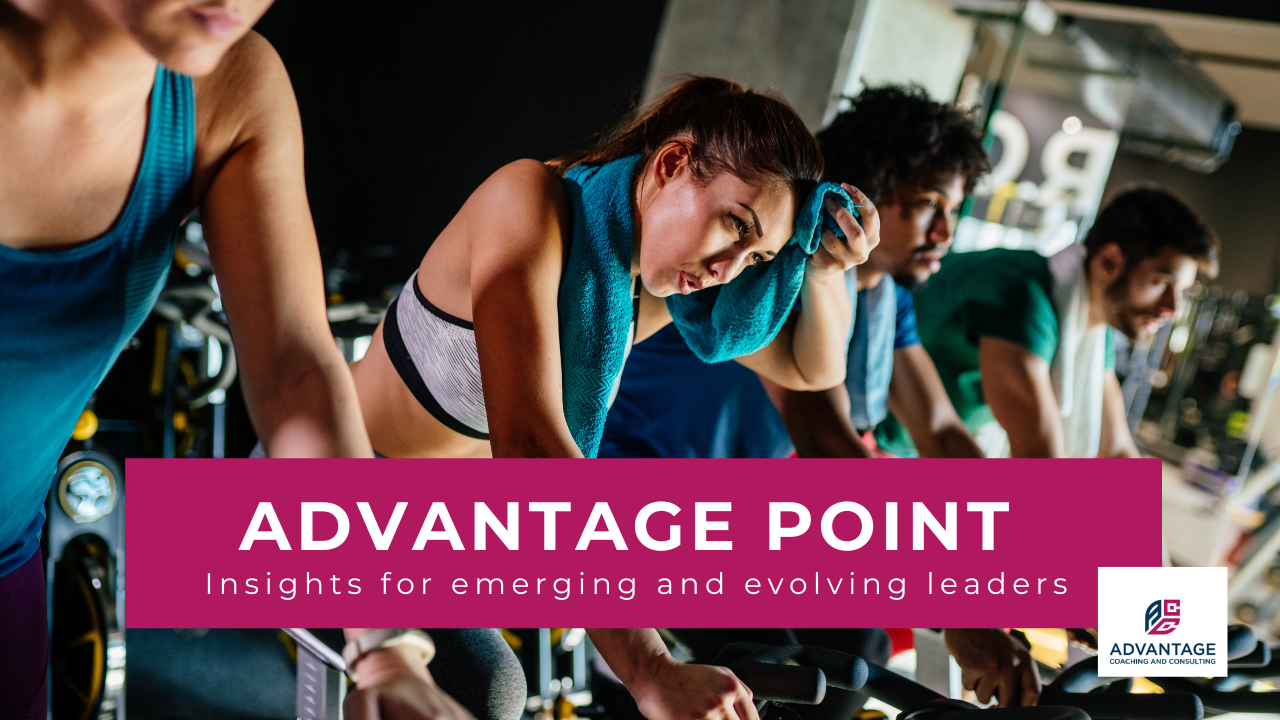
Last week, I talked about the importance of the Pause for intentional leadership and Executive presence. This week, I want to focus on how our bodies and brains work to create breakthrough thinking - and what I learned from my Sunday morning RPM class. This morning, at my regular Sunday RPM class, something clicked. Not just another gear on the bike - an idea for this newsletter. As I pushed through the warm-up and into the red zone, feeling my heart rate spike and my legs burn, my mind started racing in a different way. And then, as I deliberately pulled back into the green zone to recover, the idea didn't just stay with me, it crystallised. That's when I realised: this pattern isn't unique to my Sunday morning cycling class. It's the same pattern I see in the most effective leaders I work with. And it's anchored in something we often ignore in our packed calendars; the fundamental incompatibility between doing and thinking. Two Systems, Two Zones In exercise, we talk about training zones. The red zone is anaerobic - intense, unsustainable, all-consuming. The green zone is aerobic, sustainable, restorative, where endurance lives. What I've noticed is that my brain needs both, but in sequence. The red zone primes me. It demands every bit of physical focus I have, which paradoxically sweeps away mental clutter. Then, when I shift down into the green zone, that's when breakthrough thinking happens. Not during the intensity, but in the deliberate recovery that follows. The neuroscience backs this up. During high-intensity exercise, our brains experience increased blood flow, a surge in brain-derived neurotrophic factor (BDNF - essentially fertiliser for neural connections), and elevated neurotransmitters like dopamine and norepinephrine. But here's the key: this neurochemical cocktail doesn't do its best work during peak effort. The magic happens in the transition, when our prefrontal cortex - our executive thinking centre - comes back online with enhanced neurological capacity ready to fire. The Doing Mode Trap This maps directly to leadership work, and it explains why so many executives struggle to find time for strategic thinking despite knowing how critical it is. When we're in "doing mode" - responding to emails, attending back-to-back meetings, making rapid-fire decisions, putting out fires - we're operating in our own version of the red zone. Our sympathetic nervous system is activated. We're using reactive, habitual neural pathways. And crucially, we're not accessing the deeper, integrative thinking that happens in our prefrontal cortex. Just like I can't have my best ideas while sprinting at maximum heart rate, executives can't do their best strategic thinking while in execution mode. The brain simply doesn't work that way. These aren't two things on a continuum - they're two genuinely different neural states. The Transition Is the Work Here's what I've learned from my RPM practice that applies directly to leadership: you need both zones, and you need to design the transitions deliberately. In my work supporting leaders on their leadership journey - from emerging leaders finding their voice to senior executives navigating complex challenges - I see this pattern repeatedly. Most leaders are stuck in the perpetual red zone at work. They've created schedules that are all intensity, all execution, all doing. And then they wonder why they're not thinking strategically, why they're not seeing the bigger picture, why they're not having the insights they need to lead effectively. The answer isn't to eliminate the red zone. We need execution. We need intensity. We need focused doing. But we have to follow it with designed recovery - with space that allows our brains to shift into a different mode. Beyond the Bike: Creating Your Green Zone Exercise is one way to create this shift, and the research on exercise and cognition is compelling. But it's not the only way. What matters is finding practices that help you transition from doing mode to thinking mode. Leaders I work with find this in: Long walks with no destination in mind Contemplative practices like meditation or journaling Extended time in nature without devices Creative pursuits that engage different parts of the brain Strategic conversations that are genuinely exploratory rather than decision-focused The common thread is that these practices create space for your brain to shift states. They move you from reactive to reflective mode. They let your prefrontal cortex come back online with all its capacity for integration, pattern recognition, and strategic insight. Designing for Thinking This isn't about self-care or work-life balance, though those are worthy goals. This is about performance. Strategic thinking isn't something that happens in the margins of an overpacked calendar. It requires different neurological conditions than execution does, and creating those conditions needs to be as intentional as any other part of leadership work. The practical implication is simple but challenging: if you're not building transitions into your schedule, you're not building in time for your best thinking. This might mean blocking recovery time after intense periods, building a buffer between context-switching meetings, or understanding that sometimes the most productive thing you can do is deliberately slow down. Whether you're leading a team through transformation, navigating your first senior leadership role, or trying to shift your organisation's strategic direction, the quality of your thinking matters. And the quality of your thinking depends on creating the conditions that allow it to happen.  Questions for Reflection Think about your own patterns over the past week: When did your best thinking happen? Was it during a scheduled meeting or in some form of transition? What does your calendar say about the balance between your red zone (doing/execution) and your green zone (recovery/thinking)? If strategic thinking requires different neurological conditions than execution, what practices help you create those conditions? And perhaps most importantly: What would it look like to design your schedule not just for productivity, but for the kind of thinking your leadership actually requires? I work with leaders at all stages of their journey to navigate these kinds of challenges. If you are struggling to find space for strategic thinking, you are not alone - and you do not have to figure it out alone. If you need some support or want to know more 📩 Get in touch at tania@advantagecoaching.com.au or schedule a clarity call.
By Tania Willis April 6, 2026
I was watching an ABC interview last week and was intrigued by a question an interviewer asked an orchestral conductor. I can’t remember the exact wording of the question, but it was something along the lines of: “What are you doing when you step up to begin a piece of music?” The conductor paused, smiled, and said he’d never been asked that before. His answer was simple and profound: First, he said, he’s changing the emotion of the audience and preparing them for what’s next. Second, he’s moving himself into presence - owning the space and his role in it. What a powerful representation of leadership. It reminded me of the importance of the pause - those few moments before we begin facilitating a workshop, stepping into a coaching conversation, or leading through challenges. I first learned this habit years ago as a group fitness instructor. I’d arrive early, check the room, test the sound (because there’s nothing like leading a class to absolute silence when your mic battery dies), do a quick run-through of the choreography and take a few quiet minutes to centre myself before the energy began to build. That small ritual - creating calm before movement - has stayed with me ever since. And I know when I skip it… Let’s just say the playlist isn’t the only thing off-beat. Now, whether I’m facilitating or coaching, I consciously build in a moment to pause. A few slow breaths, a quiet piece of music, and a mental clearing of the day so far (and yes, a quick check that I’m not still on mute). And when I invite participants to pause with me before we begin, something shifts. You can feel it in the room. Shoulders drop. Jaws soften. The collective rhythm slows. People arrive. Not just physically, but mentally and emotionally. The Leadership Connection A senior executive I once worked with shared that she used to run from back-to-back early morning meetings straight into her weekly team stand-up. High energy, full of ideas, but often impatient and reactive. Her team, meanwhile, were still catching up - sometimes anxious about the incoming flurry of updates (and still trying to locate caffeine). Through coaching, she began experimenting with a simple practice: before walking into the room, she’d pause. One deep breath. One clear intention: How do I want to show up right now? Over time, her team noticed the difference. Meetings became calmer, conversations more open, and trust deepened. She didn’t change her strategy - just her state. That’s the power of the pause. The Science Behind It Neuroscience supports this (of course it does - science loves and often needs a good pause). When we pause, even for a few seconds, we activate the parasympathetic nervous system, the body’s built-in “it’s okay, you’re not being chased by a tiger” mode. This reduces cortisol, increases oxygen flow to the prefrontal cortex, and restores access to our higher-order thinking skills: empathy, decision-making, and perspective (Goleman, 2013; Siegel, 2020). Without that pause, leaders risk operating from the amygdala - the brain’s threat centre, otherwise known as the drama department. That’s when we send the regret email, jump to conclusions, or buy a dozen doughnuts “for the team.” Research from Harvard’s Ellen Langer on mindfulness and attention shows that brief, deliberate pauses improve focus and creativity while reducing stress. And Daniel Kahneman’s work on Thinking, Fast and Slow reminds us that slowing down even momentarily allows us to engage “System 2” - the thoughtful, deliberate part of the mind that helps us respond wisely instead of react wildly. A Gentle (and Slightly Cheeky) Invitation In leadership, facilitation, or coaching, the pause isn’t wasted time. It’s productive stillness. It’s where presence begins and intentional leadership takes form. So, what do you do to prepare your team, your participants or clients? And just as importantly, what do you do to prepare yourself ? Because leadership isn’t a sprint - it’s a symphony. And every outstanding performance starts with a pause. Leadership development isn’t just about learning - it’s about becoming. If you’re ready to help your leaders grow with purpose and presence (and maybe even enjoy the silence before the music), I’d love to partner with you. 
By Tania Willis April 6, 2026
In leadership development, few frameworks have the longevity and intuitive appeal of 70:20:10. It reminds us that real growth doesn’t happen just in a classroom, it happens through experience, reflection and connection. The model suggests that: 70% of learning comes from experience - the stretch assignments, jobs, and everyday challenges of leadership. 20% comes from others - feedback, mentoring, observing peers. 10% comes from formal learning - courses, workshops, programs. It’s an elegant ratio that shifts our focus from training leaders to developing them . However, in practice, most organisations continue to invest heavily in the 10% and, without the right follow-through, that investment often fails to produce lasting change. That’s where coaching becomes a critical enabler. Turning Learning into Leadership Workshops and formal programs can spark insight - but insight alone rarely creates sustained change. Without reflection and consistent application, what is learned often fades. Coaching is the bridge between knowing and doing : it helps leaders turn theoretical learning into daily practice, experiment in the real world, and embed new behaviours. For example: In a study of 70 leaders, coaching was shown to improve emotional intelligence and leadership self-efficacy, which then translated into more authentic and change-oriented leadership behaviours. PLOS+1 A systematic review of coaching leadership styles (2000-2025) found that coaching enhanced employees’ motivation, promoted skill development, and strengthened organisational adaptability. MDPI Research on leadership development shows that when coaching is nested within a broader program (rather than stand-alone), it tends to produce better returns. Regent University In other words, if the 70% (on-the-job experience) is your real playground for development, coaching helps leaders make that playground safe, structured and focused. The Reflective Edge Reflection is too often the missing piece in development efforts. Coaching creates the space and rhythm for leaders to pause, observe themselves in action and learn in real time. That means coaching doesn’t just add to the 10% or the 20%, it deepens all three parts of the 70:20:10 model: It deepens learning from experience (70%) by framing real challenges as development opportunities, and encouraging reflection and adaptation. It amplifies learning from others (20%) by modelling effective inquiry, feedback cycles and peer discussion. It reinforces formal learning (10%) by helping leaders personalise what they’ve learned and operationalise it in their context. From a culture-perspective, the most significant shift comes when coaching helps turn isolated learning moments into sustained capability change. From Framework to Culture The 70:20:10 model reminds us that leadership development is not an event. It’s a process. Coaching ensures that the process lives beyond the workshop. When organisations integrate coaching into leadership programs, they move from delivering training to developing capability . Instead of simply attending a program or a workshop, leaders begin to live the learning: they test, iterate, get feedback, adjust-and then build confidence and competence. As one organisation found: giving leaders coaching as part of their development journey helped them translate program learning into action: "Integrated coaching helps leaders apply what they’ve learned in context - a key factor in ensuring long-term impact.” CCL Innovation When this happens, learning becomes part of the culture and reflection, experimentation, feedback, and coaching become how leaders lead. Reflection for Leaders and Designers Where does your organisation currently invest most of its energy: the 10%, 20% or the 70%? How might you use coaching to help your leaders make sense of what they’ve learned and turn that into lasting change? If you design or purchase leadership programs, how will you embed coaching (not as a nicety but as a core component) so that the learning doesn’t stop when the class ends? If you’re exploring how to design leadership programs that integrate coaching, or want to help your leaders turn learning into capability , I’d love to collaborate. That’s where the real advantage lies.
By Tania Willis April 6, 2026
I recently rewatched Patience (iview/UKChannel 4) a crime drama about Patience Evans, an autistic police archivist whose quiet but brilliant pattern-spotting ends up pulling her into investigatory work with Detective Bea Metcalf. A few scenes hit me differently this time, not just as storytelling, but as prompts for how we lead or like to be led in real life. Patience lives in a world built around standard assumptions, how police investigations “should” run, how colleagues “should” communicate, and how decisions “should” be made. Her presence (and very different way of thinking) forces those around her to grapple with how much of leadership is about expectation and how much is about adaptation . Because the show intentionally centres a neurodivergent character, it invites us to reflect on how much leaders default to “the norm” and how often that leaves remarkable talent unseen or undermined. Here are three lessons I took away, and how they speak into leading inclusively: 1. Patience is active, not passive In one pivotal scene, Bea Metcalf is pushing hard to move on a lead. Patience resists the rush: she asks to pause, review evidence more deeply, and reconsider assumptions. The pressure is mounting from the team and the clock, but the pause yields a fresh insight that the rest almost missed. What feels like “waiting” is actually tension, listening, observing, gathering and understanding nuance before taking action. As leaders, we often mistake “waiting” for weakness, but that pause can be the moment we see distinctions others missed. Pausing long enough to sense what’s really happening. To calibrate. To avoid acting on impulse or bias. For me, this really resonates and the space is crucial, but often misunderstood. My thinking, processing, or communication tends to unfold at a different rhythm. If I’m pushed too fast, I tend to lose clarity or completely miss the key strength around a decision. But if I am given the space to be more deliberate, I am able to offer deeper contributions. True leadership isn’t about rushing ahead. It’s about slowing down, listening, and being fully present so others feel seen and valued. 2. Tailor your approach - one size does not fit all Early on in the show, a colleague assumes Patience will communicate updates verbally and fast, as is the norm in detective work. Instead, Patience sends annotated notes, maps connections visually, or even steps back to think things through in writing. Her mode doesn’t match the expected rhythm, so some dismiss her - until Bea (finally) leans in and asks, “How do you prefer to show me what you see?” That moment underscores that inclusive leadership isn’t just permissive, it’s responsive. In a team, someone may shine through quick verbal brainstorms; someone else may shine through careful written reflection. In everyday leadership, this means: don’t default to your preferred style. Some people need time to think. Others prefer sketches, diagrams, or talking it through. Some team members will bring unique wiring - sensory sensitivities, need for structure, or alternate problem-solving paths. A leader who adapts to those modalities invites more voices in and it’s on us to notice, adapt, and scaffold. 3. Model grace in the gap between expectation and execution One of my favourite moments is a scene where Patience misinterprets a chain of evidence, and Bea (the detective) might have sharply confronted her. Instead, she pauses, acknowledges the tension, and asks: “Tell me what you see. Where did it trip you up?” - not as blame, but as curiosity and partnership. Patience then re-frames, corrects, and they move forward together. That moment reminds me: leadership isn’t about never failing - it’s about how we respond when people stumble. Great leaders don’t hide disappointment or pretend failure doesn’t sting. But they don’t let it degrade dignity either. They see the gap, acknowledge it, and bring the other person along. Like the characters in Patience , teams and individuals need space to evolve. Good leaders balance high expectations with the grace to allow others to grow into their potential. For people navigating difference - learning curves, social fatigue, sensory overload - knowing a leader won’t abandon them when they struggle is incredibly powerful. For me, these lessons echo what leadership is really about: not the title or the pace, but the way we show up for people in the long run. So, how do these lessons meet inclusive leadership in practice? Start with listening: Before proposing change, ask how people prefer to take in information. Slow it down. Build in buffer space: Project plans and rhythms should allow “breathing room” - extra cycles for processing, reflection, iteration. Normalise asking for accommodations: Model vulnerability yourself (“I need a moment to think this through”) so others feel safe doing the same. Recognise that people shine in different ways: some do their best thinking in quiet bursts, others come alive through collaboration. 💬 Question for you Which of those three leadership lessons - patience as active, tailoring your approach, or grace in gaps - resonates most right now? How might you lean into it this week, especially for someone whose needs differ from yours?